BOM Forecast Gives Sunshine Coast Monday Showers, South-Easterly Swell And Lighter Tuesday Seas
Sunshine Coast beachgoers, fishers and small-boat users started Monday with a marine forecast calling for showers, moderate south-easterly winds and a steady south-easterly swell.
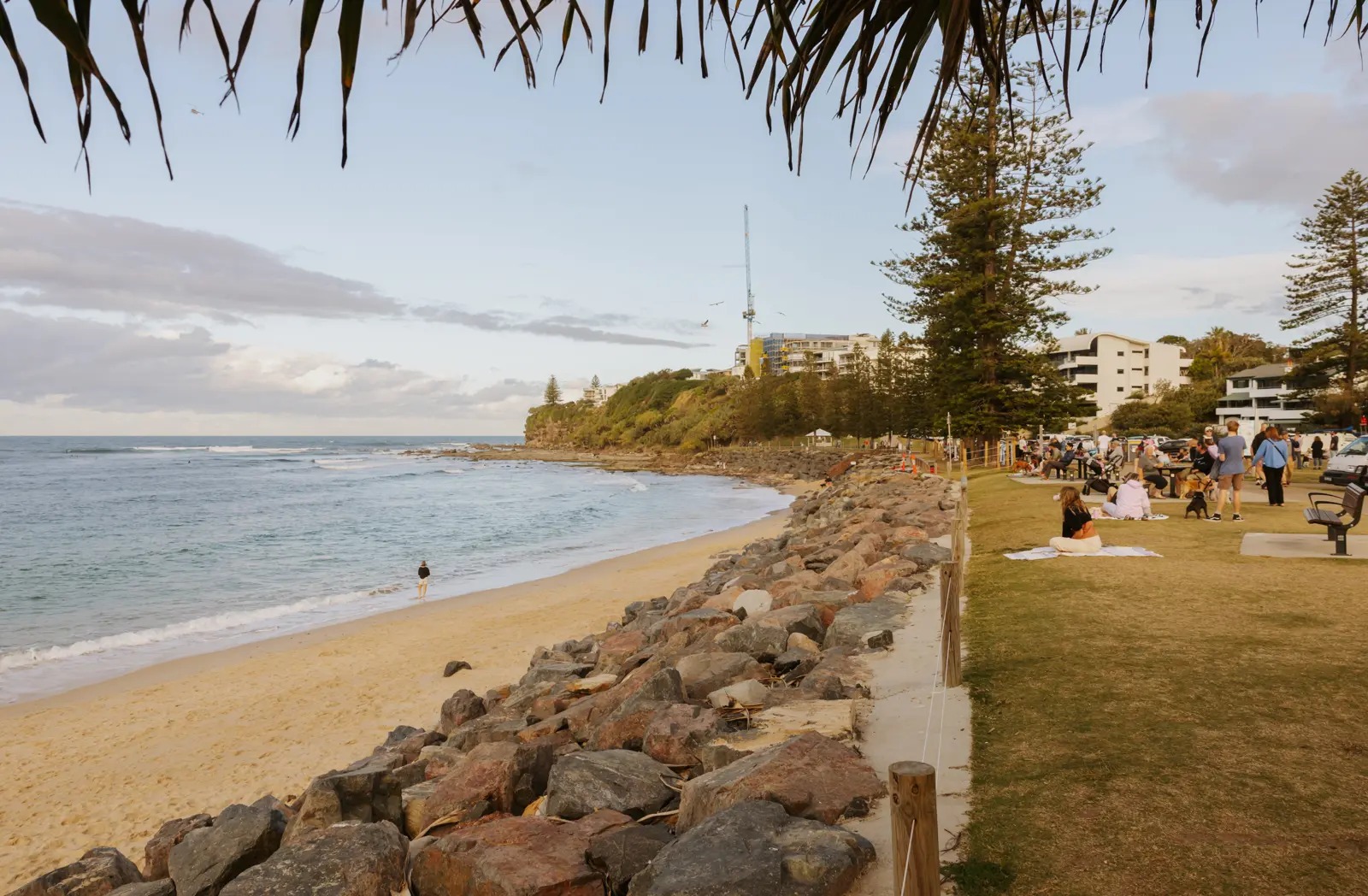
Moffat Beach on the Sunshine Coast. Monday's marine forecast pointed to showers and a steady south-easterly swell.
Sunshine Coast beachgoers, fishers and small-boat users started Monday with a marine forecast that called for showers, moderate south-easterly winds and a steady south-easterly swell rather than a clean, glassy winter beach day. The Bureau of Meteorology forecast for Sunshine Coast waters, from Double Island Point to Cape Moreton, was issued at 9pm EST on Sunday 28 June and said a ridge extended over south Queensland waters while a 1034 hPa high was moving east across New Zealand.
For Monday 29 June, the bureau forecast south-easterly winds of 10 to 15 knots, reaching up to 20 knots offshore north of Maroochydore during the morning and early afternoon, with winds tending easterly early in the morning. Seas were forecast around one metre, with a south-easterly swell of 1.5 metres and a 70 per cent chance of showers. Those settings are not extreme, but they are enough to change the feel of the open beaches and to make conditions more exposed for people heading offshore or planning family beach time around the school holidays.
The practical beach read is mixed. A south-easterly swell can keep exposed stretches active while more sheltered corners may be more manageable. Showers and onshore influence can also reduce the comfort factor for casual swimmers and families who are not used to winter water conditions. The bureau's reminder is worth repeating: wind and wave forecasts are averages, wind gusts can be 40 per cent stronger than forecast, and maximum waves can be twice the forecast height. That warning matters most for small craft, rock fishers, paddlers and anyone tempted to treat a one-metre sea forecast as a guarantee of easy conditions.
Tuesday's forecast looked slightly softer but still unsettled. The bureau expected easterly winds of 10 to 15 knots turning north-easterly in the morning, seas around one metre decreasing below half a metre by early evening, a south-easterly swell of one to 1.5 metres and a 60 per cent chance of showers. By Wednesday, conditions were forecast to improve, with north-easterly winds about 10 knots, seas below one metre, a south-easterly swell around one metre inshore and one to 1.5 metres offshore, and mostly sunny weather.
For local businesses, the forecast is part of the daily operating picture. Surf schools, fishing charters, cafes, accommodation providers and beachside retailers all feel the difference between a clear winter beach day and a showery one. For councils and lifesavers, changing conditions also shape patrol messaging, signage and public behaviour. The Sunshine Coast's beaches are often marketed as effortless, but winter marine conditions still require judgement, especially where swell, rips, rocks and changing wind direction interact.
The sensible plan for Monday was to check the latest forecast before heading out, choose beaches and activities that match the conditions, and avoid treating the forecast as static. The weather pattern was not severe enough to cancel the Coast's daily rhythm, but it was active enough to reward caution. Visitors who came for the first week of the holidays should still find windows to enjoy the coast; they just need to treat the water as a moving environment rather than a backdrop.
More in Weather & Surf
Keep reading
BOM Forecast Gives Sunshine Coast Waters Sunny Week With Light Winds And Low Seas
The Bureau of Meteorology's Sunshine Coast Waters forecast is pointing to a mostly sunny and relatively manageable stretch for the marine zone between Double Island Point and Cape Moreton, with light winds and seas generally around or below one metre through the middle of the week. The official forecast available on August 4 described a high-pressure pattern over south-east Australia and lighter conditions compared with stronger winter southerly patterns that can make offshore and exposed-water plans more difficult.
BOM Forecast Puts Sunshine Coast Waters In Showery South-Easterly Weekend Pattern
The Bureau of Meteorology is forecasting a showery south-easterly pattern for Sunshine Coast waters heading into the weekend, with Friday and Saturday both expected to bring 15 to 20 knot winds and elevated shower chances.
BOM Forecast Gives Sunshine Coast Waters Sunny Thursday Before Showery Friday
The Bureau of Meteorology is forecasting a sunny Thursday for Sunshine Coast waters before a stronger southeasterly flow and a high chance of showers arrive on Friday.